Most of my friends and readers know that I’m adopted.
Some have taken the time to read my various blogs about finding my biological mom (NOT a good ending, unfortunately) and finding my biological dad (well, at least he didn’t send his lawyer after me!). If you’ve stuck with me through these very personal stories, I thank you!
And if you read a copy of my recently published book, Caring for Mom and Other Loved Souls, I also thank you! And if you actually took the time to leave a review for the book, I applaud you for supporting a first-time book author. I know it might not be easy reading a memoir about a 93-year old’s end of life… especially someone you likely didn’t know. But it was a story I had to tell, about my “mom” (my adoptive mom who raised me and who I view as my true parent). And I’m more than thrilled that it is done and out there.
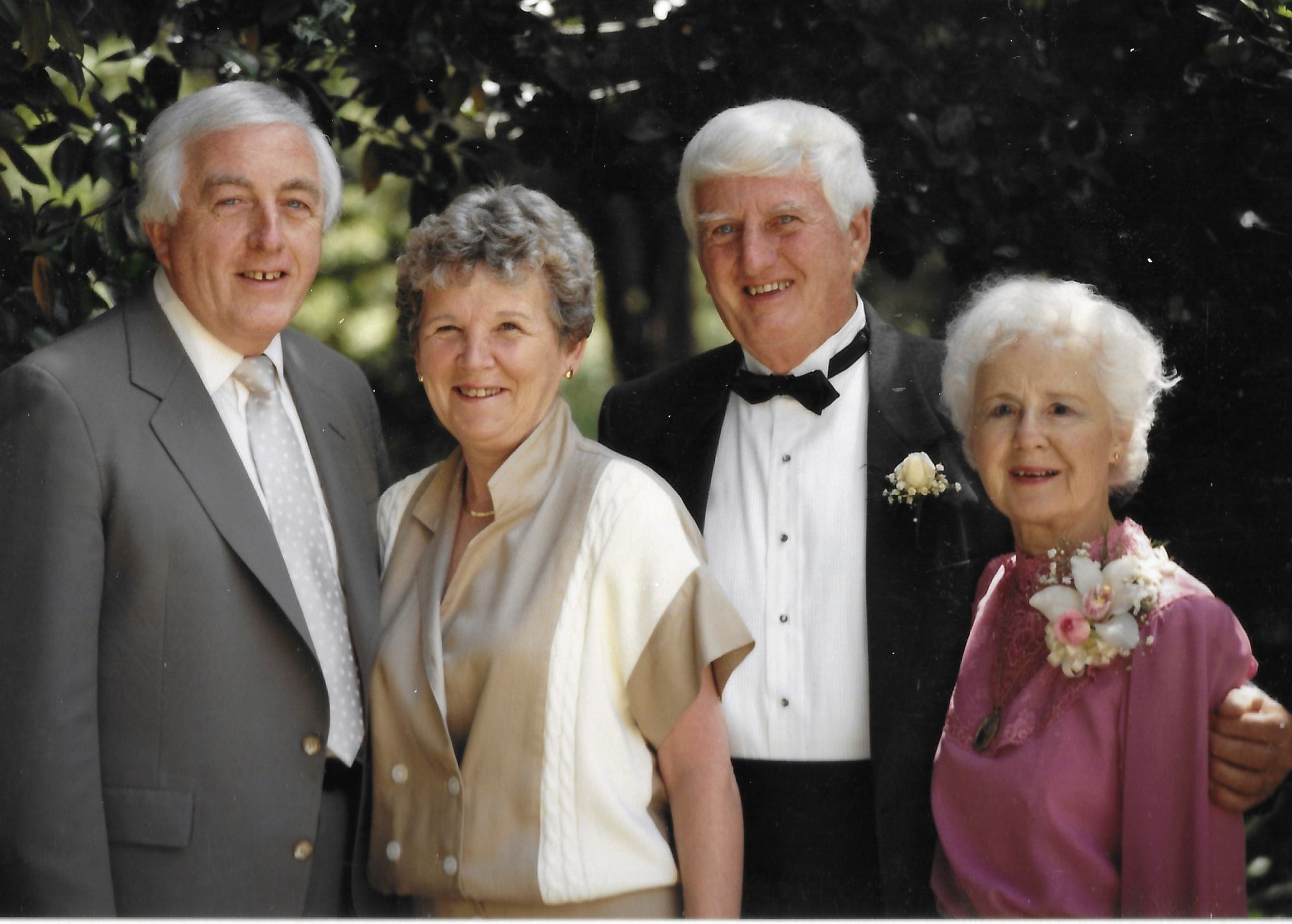
This past month my Uncle Joe passed away at the amazing age of 95. My father’s brother (again, I know it’s confusing, but I’m talking about my adoptive father, Ed, who raised me, and who I view as my real father). Here’s a photo of my Uncle Joe (from left to right), Aunt Helen and my parents, from my wedding in 1987.
My Uncle Joe’s death brought up a lot of memories about my father. Joe was my dad’s younger brother although Joe outlived my dad by 33 years. My dad passed away at the age of 68, decades ago. He was robbed of so many good years. My two sons never knew him, an enduring sadness for me.
Two wonderful people chose me to be part of their family. I had a beautiful life with loving parents, and I couldn’t have had better role models, felt more loved, or loved anyone as much as I loved them. I always viewed them as my “true” parents. When I was very young, and they had told me I had been adopted, they said they had chosen me, out of all the other babies, at the baby store. I felt so special then, and still do today.
They both are gone now and I miss them dearly.
I had never given much thought to who my biological parents were. I always felt it didn’t matter, that their pairing—and my conception—was only a biological accident involving sperm and an unprotected egg.
But then, about 6 years ago I wanted to find some information on my family heritage. This was driven more by my young adult sons, frankly. I wanted them to have some info on their ancestry, as well as to not have to wonder about what health-related concerns they may have inherited from unknown genetics. All my life I had always had to draw a huge X across the “family medical history” sections when filling out the paperwork at doctors’ offices.
Along with routinely sharing a great deal of storytelling throughout my youth, my parents left me with many family photo albums and boxes of both our family and distant family memories (including letters, scrapbooks, military artifacts, and more). My mom even wrote a short autobiography in her later years, which is packed with her lifelong stories, and is such a treasure for me.
Throughout my life I have always been one to collect and preserve memories. Some people might even say I’m a “memory hoarder” and they would probably be right.
Ah, memories, and the stories behind them. They were important to my mom and they are important to me.
I haven’t written much for my blog over the past few years. I guess I’ve been busy.
I did write a book and have continued with my freelance writing. But I’m a passionate journalist—who loves writing about my own observations in life—so it seems strange I haven’t been more focused on this blog.
Ahhhh….maybe THAT is why I have shied away from writing more?
Nah….
Actually, the major distraction in my life over the past few years was selling our family home of some 30 years… downsizing all our belongings… and then moving.
My “kids” often say I’m a technology dinosaur. But I’m a dinosaur in so many other ways as well.
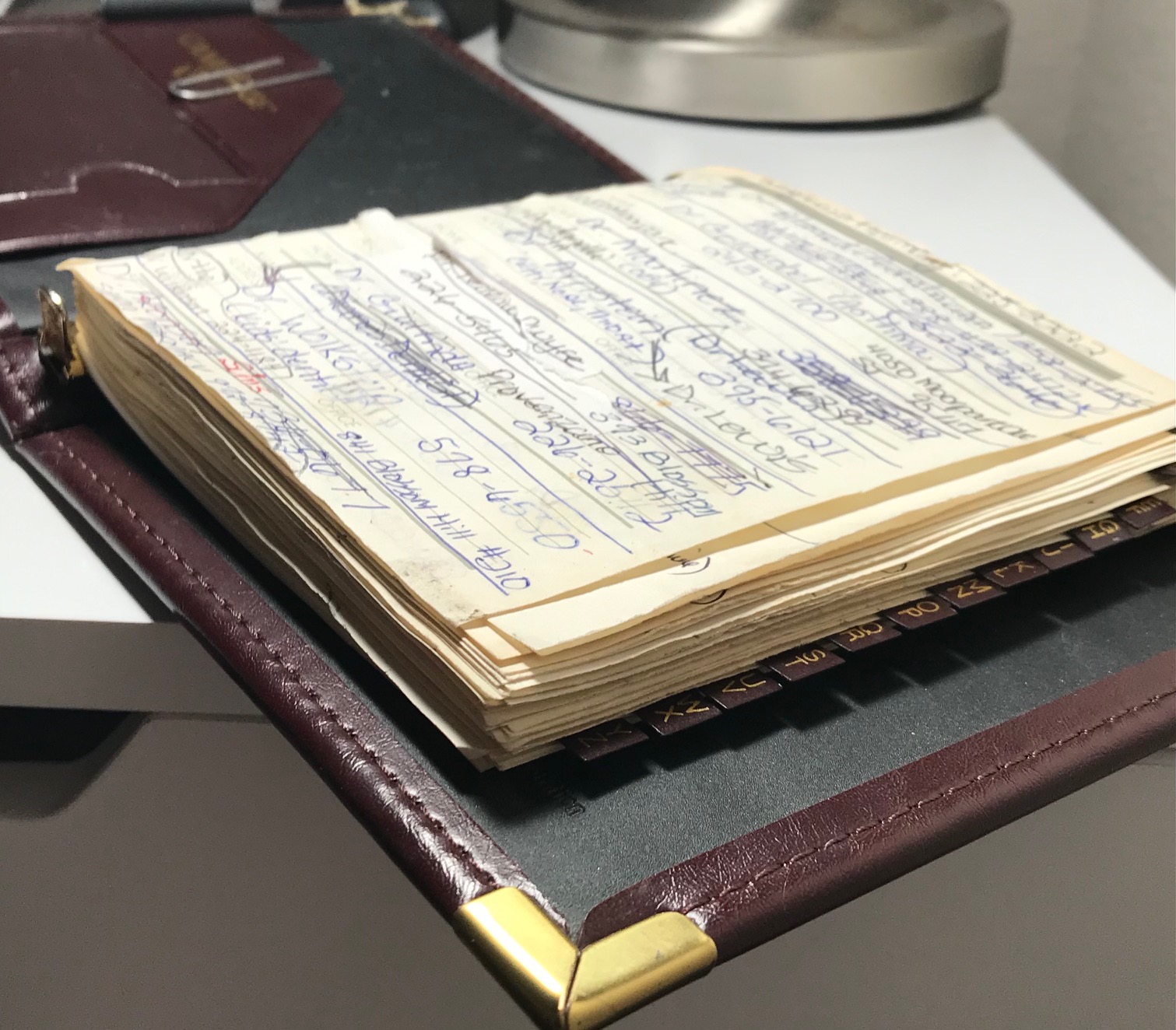
Recently, when I reached for my spiral-bound, paper-based address book, I caught myself reflecting on the many cross-outs throughout the book—as well as the many entries needing to be crossed out!
Now keep in mind, my address book is at least 31 years old. How do I know that? Well, it contains my 31-year-old son’s original pediatrician’s phone number (the one who actually came and examined him at the hospital when he was born). A month later we ended up with a different pediatrician, so the original doctor’s name and info was soon crossed out. There’s still an arrow from that cross-out to the replacement pediatrician’s name and number. Of course, that doctor’s contact information, too, was crossed out long ago.
It’s Not Just About Saving the Ta-Tas, It’s About Saving Lives
Well, it’s been over a month since I walked in the 60-mile Avon 3-Day Breast Cancer Walk. 12 blisters are finally healing, I’m not limping anymore, and I’ve finally withdrawn from Gatorade. So, I am sitting down and writing a re-cap of a truly unbelievable, inspiring experience.
Day 1: Excitement…and great surprise!
The 3 days began with over 3,000 fresh and eager walkers starting out the gate, as escorts of San Jose bike and motorcycle cops lined the route. Quite the media event, with helicopters filming and thousands of supporters clapping, waving and wishing us well.
I was tired and distracted, but glad for the 3-Day to finally be here after some 4 months of training. My mom had been taken by ambulance and hospitalized the week before, and was still ill, and it was somewhat questionable right up until the night before the walk as to whether I’d be able to even do it. The stress of her illness, and staying up late the night before to pack at the last minute, had made for a somewhat less than perfect send-off that morning. I was feeling pretty miserable, not at all how I had hoped to feel on the initial day of my trek. But soon, the energy and enthusiasm of the crowd gave me the shot of adrenaline I needed to get moving.
The mood for Day 1 could best be described by two words: excitement and surprise. The surprise was how emotionally impacted I would become during the walk, especially on that initial day. I would never have believed how touched I would be by the extensive support we received from strangers along the route. People you had never met before—and would probably never meet again—were supporting you with such emotion and care. It wasn’t just a cheering section like at a competition (urging you on to the finish line); instead, it was very intimate, with people sharing their emotions and own personal wounds openly with thousands of walkers.
Supporters cheered and cried. People high-fived you with such enthusiasm you would have thought they were your best friends. People positioned themselves along the route in lawn chairs offering a squirt of a hose to hot, thirsty walkers. There were children holding up pictures of their female relatives (moms, grandmas, aunts and cousins) impacted by breast cancer, along with a sign saying “thank you for walking.” I came across an older woman crouching by a large framed photo of a young woman. I guessed that it was her daughter. Words written on the front of the photo simply said, “thank you.” An older couple silently sat along the route, nodding to walkers—with tears in their eyes—as the stream of walkers went by.
A group of strangers spontaneously hugged a breast cancer survivor walker as she walked by; survivors could be identified by special pink hats worn during the walk. A man blasted “Pretty Woman” on his truck stereo as walkers passed by. This same guy, who we nicknamed “the Pretty Woman Guy” showed up no less than 20 times throughout the walk; he turned out to be the husband of a walker. A woman in a wheelchair clasped my hands and gave me an endearing squeeze while choking out the words “thank you so much.”
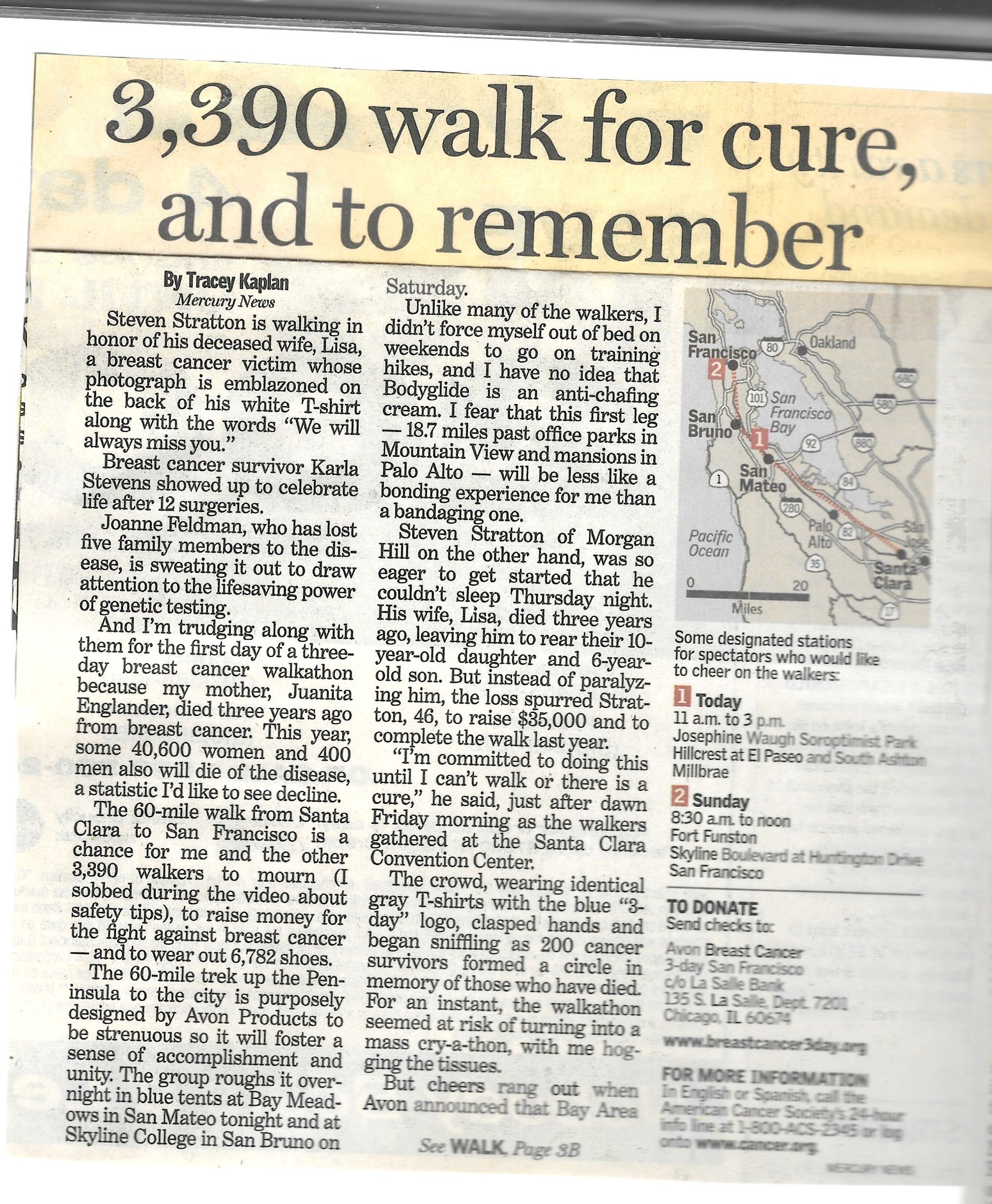
And if the supporters didn’t leave you in a state of awe, getting to know your fellow walkers did. Along the route I read the backs of hundreds of t-shirts, most were memorials to someone who had either survived—or died of—breast cancer. There was a man with a picture of his wife and kids on his shirt, walking in her memory. She had died of breast cancer 3 years before. Hearing him talk about his wife’s ordeal and how his kids had handled everything, and hearing his pain, was very inspiring. He had made a commitment to walk every year until there was a cure. I’m fairly certain he is still doing the walks (or some form of fundraising), and likely his whole family is out there as well.
There were hundreds of other stories that went with hundreds of other t-shirts. It seemed like the walk was a cathartic event for many people, sharing their pain and as well as fond memories. I was brought to tears by some; giggled at the stories of others.
At the time, I didn’t have a personal “story” relating to a family member or friend dealing with breast cancer. I was walking so that I would never have a story. I was walking so that my 3 nieces, other family, and my friends, would never have a breast cancer story of their own to share.
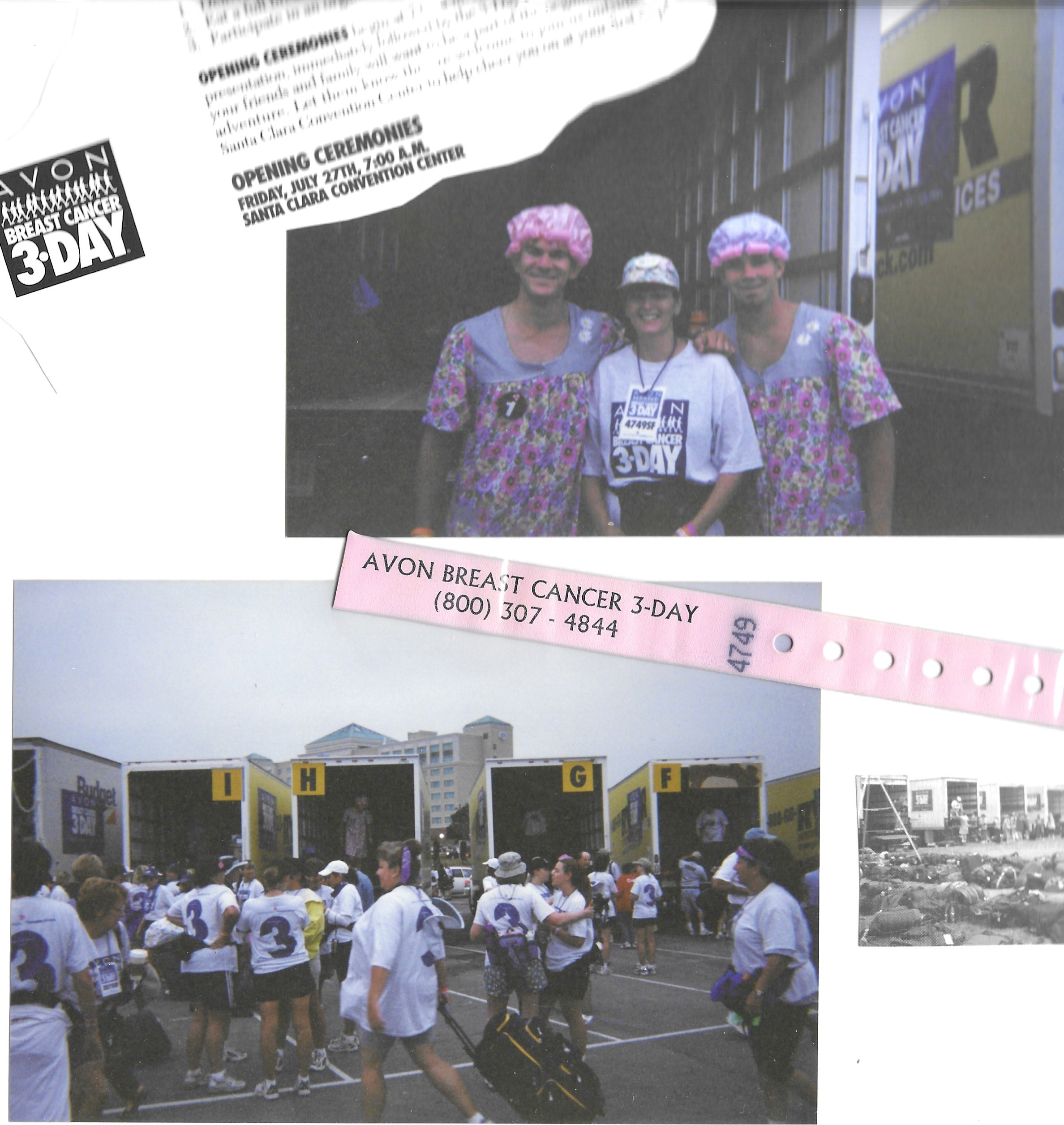
The 3-Day was well organized and they did just about everything they could to support the walkers. The walkers’ gear (tents, sleeping bags, clothes and toiletries) was taken to each camp via trucks so we only had to carry whatever supplies we wanted to haul around. I had ample moleskin/band-aids and electrolyte packets, along with layers of clothes, and my phone. I had bought a special fanny-pack that allowed me to carry two bottles of water at all times. One of the biggest priorities for all the walkers was to stay hydrated!
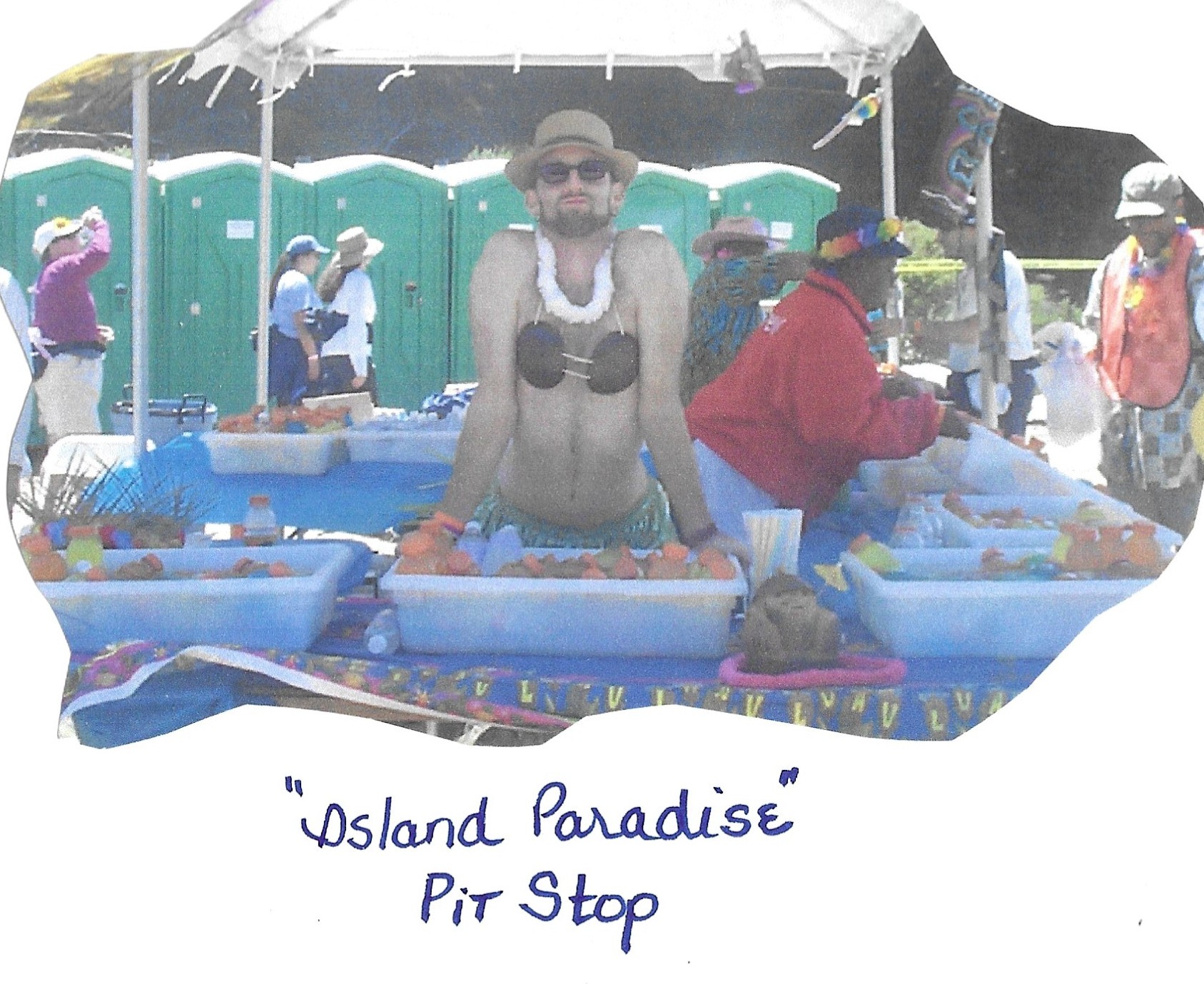
There were numerous pit stops along the routes, most having a funny theme, like “Island Paradise,” with themed decorations and volunteers wearing some pretty hilarious costumes. You could always get water and fruit, some salty treats, band-aids and various medical supplies, and of course, there were lots of porta-potties. They also handed out pit stop specific souvenir stickers to stick on the 3-Day ID card that hung around every walker’s neck. The volunteers were relentless about hydration and self-care. I must have heard, “are you drinking and peeing at every stop” a million times!
At one of the first pit stops, I talked with a breast cancer survivor about the many treatments she had had. She didn’t expect to finish the walk, but had wanted to participate as much as she could. She was wearing a t-shirt with many names of the people—including several family members—she had lost to breast cancer. When I left the pit stop, she was still sitting in the medical tent area, and looked very tired. I don’t know if she continued on or not. Many walkers didn’t complete that first day without some help along the way. Some were transported to later pit stops. Some ended their day early and were transported to camp. Although most walkers wanted to walk every mile on their own, the walk wasn’t really about the mileage. It was about showing up, raising funds and awareness, and doing the best you could.
I expected to finish the walk. I knew I’d suffer with blisters, as I had been plagued by them during training, but I fully expected to make it through the entire 60 miles with a minimum of pain.
Boy, was I in for a surprise!
With a prick of a pin, I had my first 3 blisters lanced that first afternoon. I then must have changed my gait or something (to reduce the pressure on my blisters), because my knee started to really ache later in the day, something that hadn’t happened during my training walks. I still was able to keep up a pretty good pace, however, and was in the initial third of walkers when I walked into camp that afternoon. I didn’t realize it at the time, but moving so quickly that first day was going to catch up with me sooner than later.
Night 1: A Mobile City
The first night of camp was at Bay Meadows (yes, the horse racing track). I had just walked through the applause of camp volunteers who were waiting at the Day 1 finish line, and was feeling pretty good (although more than ready to get off my knee). The “finish line” for Day 1 was not such a big deal. The real power of Day 1 was in the inspirational route, not the finish.
Once through the finish line, we were immediately sent to get our gear and tents off of the gear trucks. While the trucks hauled our stuff from camp to camp there was no one to carry your stuff from the trucks to the camp itself. No matter how much you ached or were tired, you needed to tend to your own baggage. Once we had our 30 pounds of gear, we schlepped that—what seemed like miles—to assigned tent sites. We had to set-up our own tents and tote our gear back and forth to trucks every am and pm. The camp joke that night was whether you thought the actual walk or the camp check-in and set-up was more grueling that day. Once everything was set-up at my tent-site, I struck out on another long walk to get to the showers.
In our mobile city, huge trucks housed the portable showers. If you had told me I’d enjoy showering in a truck with dozens of strangers I would have laughed, but it was GREAT! The water was hot and felt soooooo incredibly good at that point. Then it was off to the medical tent to tend to blisters and ice my knee. Talk about the walking wounded. Lots of ugly, severely blistered feet out there. Lots of bandaged legs, shins, and knees. Hundreds of people icing some part of their body. A few people even on crutches. And sadly, I saw more than one walker taken by ambulance to the hospital due to severe dehydration; scary given that most of these people, like me, had been training for months. There were physical therapists, chiropractors and massage therapists. People were lined up in a triage type of arrangement…the worst cases got the most attention…a lot of problems were simply dealt with using lots of ice. The whole thing reminded me of a scene out of M.A.S.H. (but without all the blood).
Much like the shower, dinner was sheer ecstasy. Was it really that good or was I just incredibly hungry? I went to bed early but between porta-potty doors slamming, sleeping on the ground, and late-night conversations from thousands of tents, I didn’t sleep well. I was worried about how my knee was feeling, and thinking about the challenges to come the following day. I got up once during the night to pee, and with flashlight in hand found my way to the porta-potties. Let me just say that there is nothing quite like stepping out of that dark porta-potty and looking out at thousands of identical blue tents and realizing you aren’t sure which aisle you need to turn down to get back to your tent.
Day 2: Pain…and a surprise visit from home
While Day 1 was flat, long and hot, Day 2 was supposed to be shorter (just 16.5 miles), but hilly, hilly, and hilly. Nothing prepared me for Day 2 given the pain in my knee. It hurt almost immediately that morning. I can honestly say it was pretty much painful—to varying degrees—the entire rest of the walk. The hills were the real killer…not the uphill, but the downhill…very painful on my knee.
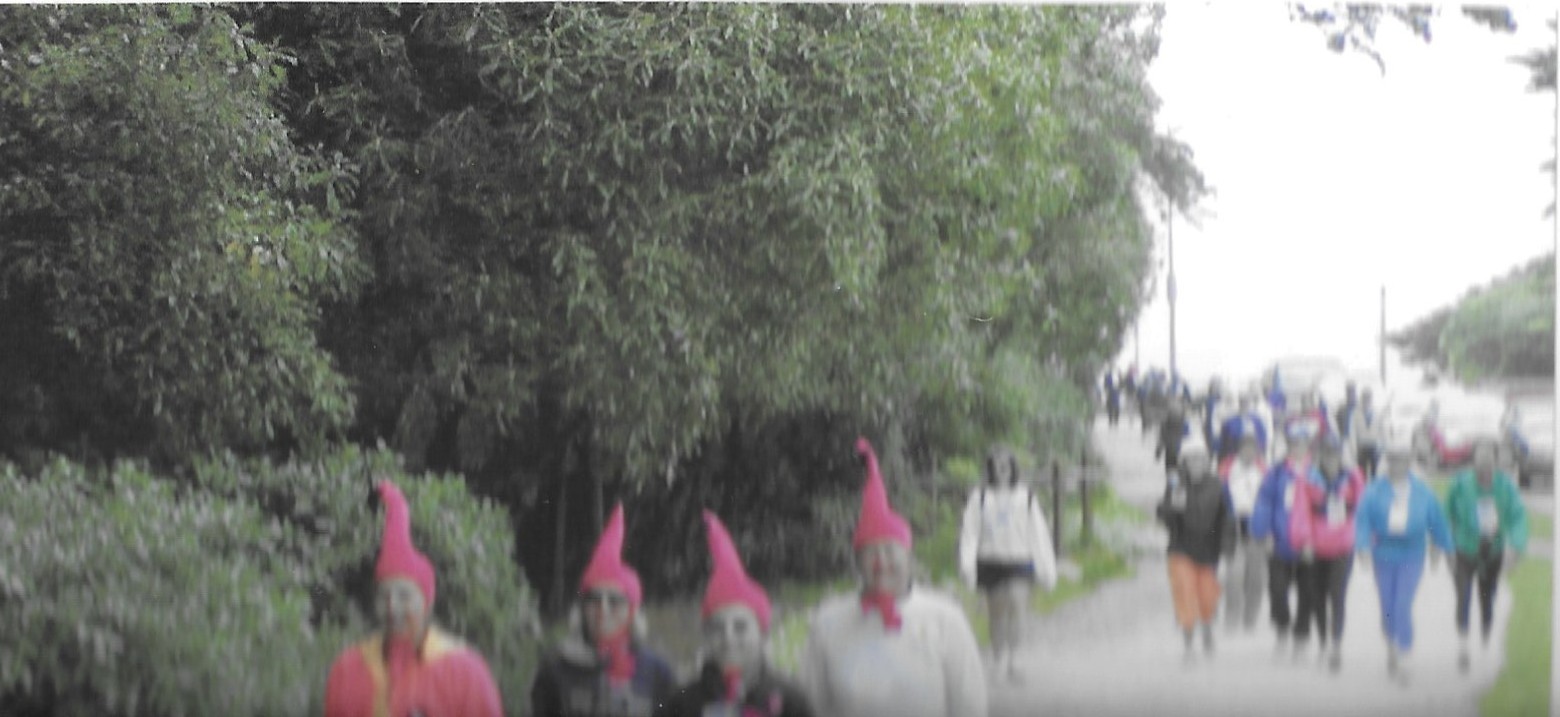
There was definitely a change in mood the second day. Less chatting, less high-fiving. People seemed a bit tired and many (most?) were already suffering from some kind of injury or blisters. I had started the morning walking with my tent-mate, Eileen, who was suffering from some leg pain of her own, but once we got split-up I ended up walking among several “teams” along the way. These were a lot of groups of walkers walking together, most were wearing some kind of matching attire (e.g., propeller-heads, flamingo hats, matching t-shirts, etc.). I talked a bit to passing walkers, eavesdropped on some of the teams’ conversations and home-grown songs, and tried to focus on the beauty of the neighborhoods we were in. Taking a lot of Tylenol and using pain patches on my knee helped, but I was already wondering if I was going to make it to the end of the walk. At times, I was seriously wondering if I’d even make it to the end of the 2nd day!
At lunchtime, John (my hubby) and Christopher (my 9-year-old son) surprised me with a visit. Amazingly, they somehow found me among the thousands of walkers at the rest stop. Somewhat embarrassingly, I was lined up at the medical tent to have my blisters dealt with. After a nice visit (consisting of some much-needed pumping up from my family), and re-popping and bandaging what were now about 6 blisters, I headed off to finish the remaining 4 ½ miles for the day. Next up was a hilly stretch the 3-Day Walk people referred to as “Hope Hill” (but was known affectionately by walkers as “Hell Hill”). It was very hot and sunny, so people were dreading this leg of the walk.
Luckily for me I had done a ton of steep hill training. The uphill climb was easy. It was incredibly easy, actually. I was quite surprised. I had been so afraid of this hill based on the folklore I had heard. I easily finished it. It gave me a morale boost in several ways: one, that I had made it so easily (many weren’t doing so well), and secondly, the support along the hill route was awesome. Spectators and hill residents were out handing out Popsicles, sprinkling people with hoses and water guns. Some kids had set up a free lemonade stand. Signs were posted everywhere, thanking walkers. Cars and sweep vehicles (trucks that made regular passes of the route that could pick up any walker who needed help to the next stop) honked and looked for “thumbs up” signs from struggling walkers. I was literally feeling “at the top of the world” when I reached the top and looked back to see a long stream of walkers, many who I had passed.
That feeling was short-lived however, as now I was faced with the downhill side of Hope Hill. As the route started a long, downhill trend, the pain in my knee got much worse. I had to literally limp much of the way, and stopped often to stretch. Fellow walkers kept asking me if I was all right, and gave me words of encouragement. Many people passed me over those last few miles. It was depressing, and I kept thinking about how I was just not going to be able to finish the third day. I didn’t talk to very many people at this point. I was focused on just finishing. I managed to keep up a slow, but steady, pace throughout the rest of the day. Luckily, it was a short way to camp.
Even in my somewhat unhappy state, I was still impressed and moved by the incredible show of support. There were lots of “recurring” characters that the walkers had named: the “Pretty Woman Guy”, the “Guy With The Dalmatian”, the “No-Hands Guy”, the motorcycle club that kept roaring by and honking…and lots of new characters all along the route. The San Jose bicycle police were also just awesome, keeping us safe as well as continually providing us heart-felt cheers and atta-boys.
Night 2: Ben-Gay and Ice
When I finally did finish the Day 2 route and arrive at Skyline College, my tent mate’s husband and kids had already set-up our tent. All right team Mitchell! Because I was much later coming in to camp on day 2 than the first day, I found that there were lines for everything, for showers, the medical tent and for food. I was a bit down, so it was nice to see John and Christopher show up again (and bring me some much-appreciated Ben-Gay for my knee). Ice and Ben-Gay! Ahhhhhhhhhhhhhh! Christopher was impressed with both the number of porta-potties and tents, and wanted to stay and cuddle with mom. I was sad when they left, but rejuvenated by their support.
It was getting cold and windy. Skyline can be brutal in terms of wind and fog and we had been prepared for the worst (it had actually rained the previous year). Luckily, the fog didn’t roll in so we didn’t have the dampness experienced by the previous year’s walkers, just cold and the whipping wind. I actually slept well, most likely from sheer exhaustion.
Day 3: Beauty everywhere… but more downhill!
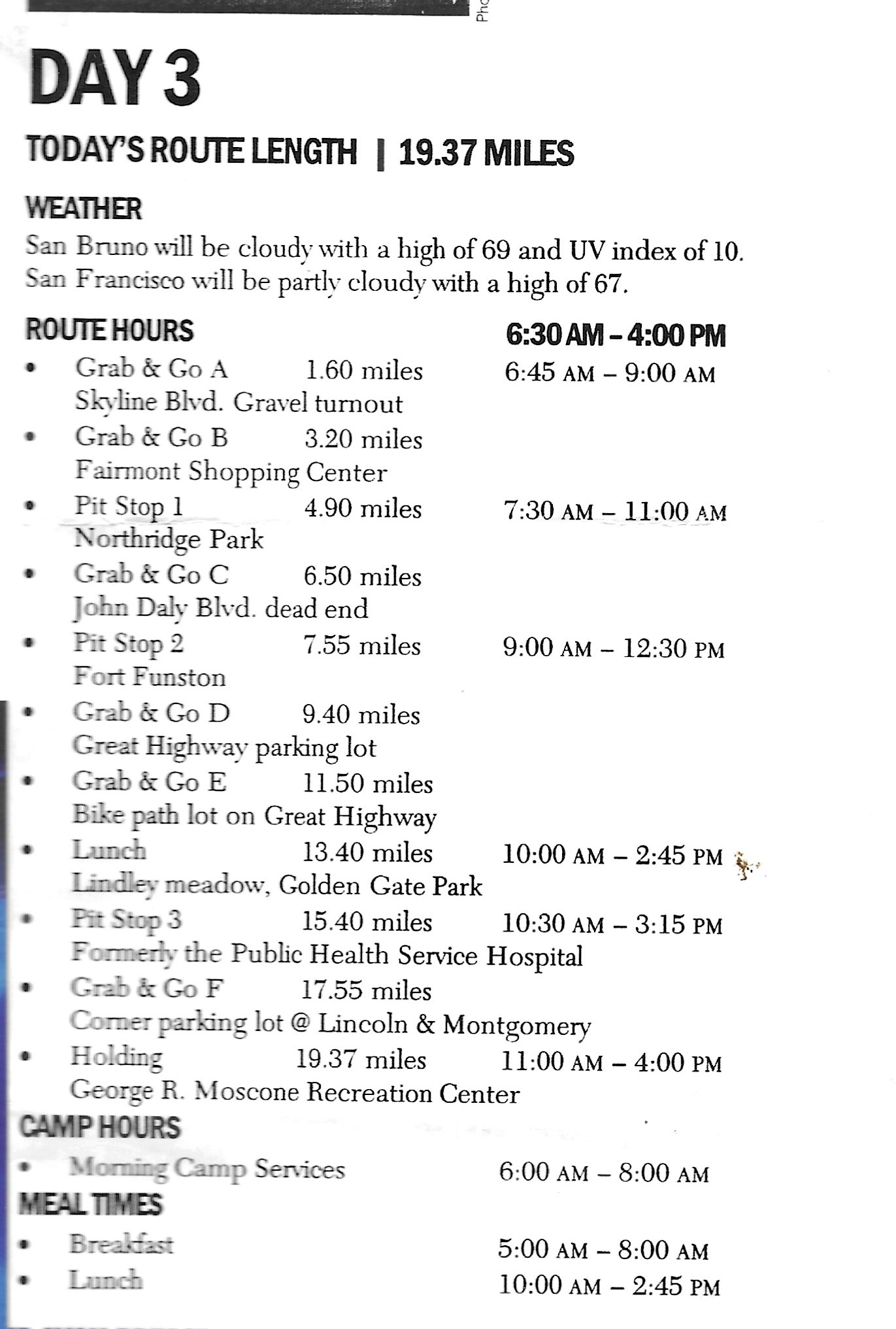
At 5:00 am we packed up quietly in the dark, turned in our tent and headed out onto the flare-lit road. The really bad news—at least for me and my sore knee—was that much of this morning would again be downhill. My knee hurt at every step. My strategy for day 3 quickly became “just make it to the next stop”. Stops were about 1 ½-3 miles apart. I walked very slow and limped on every downhill stretch. Even stepping off of curbs at each street corner was now quite painful.
But just when I would have mentally decided to stop, something along the route would inspire me to continue. The many supporters with their sincere and emotional words of thanks. The bicycle cops who formed a tunnel with their bikes and high-fived walkers as they finished a hill. Seeing fellow walkers being patched up at pit stops, seeing the determination to finish. There was a quadriplegic woman doing the walk, and seeing her along the route was very inspiring. It definitely wasn’t a matter of inner strength at this point (I had pretty much exhausted that), it was all of the emotional injections provided along the route that kept me walking.
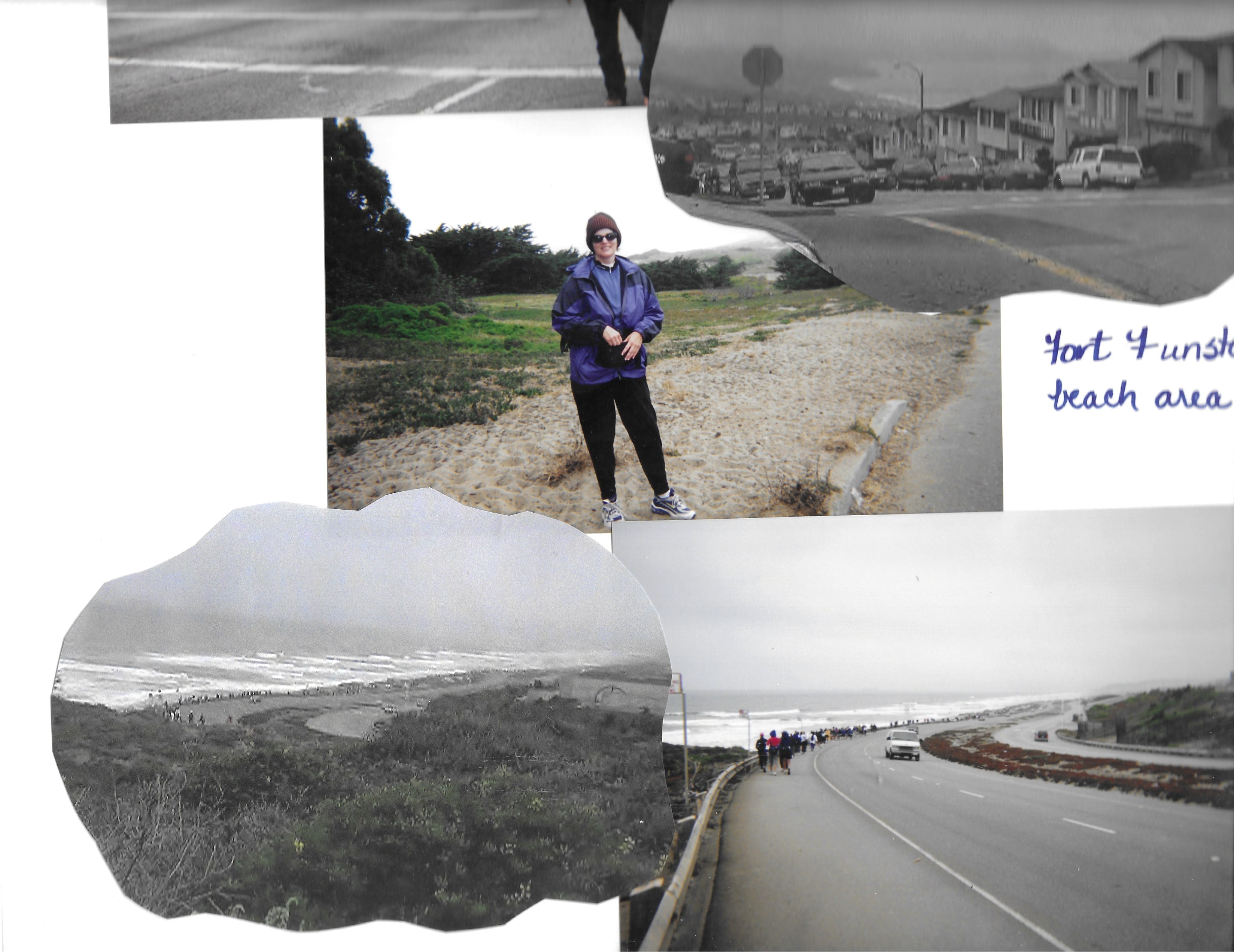
The scenery also helped me focus on something other than the walk and my knee. We went into a forest of sorts, walked by a lake and then actually walked out onto a beach. It was really a beautiful walk if it weren’t for my pain. I didn’t realize it at the time, but most of that morning I walked alone and didn’t talk with anyone. About the only interaction I had with my fellow walkers at this point (other than the constant stream of people telling me they were, “passing me to the right or left”) was when groups would ask me to take their picture along the way. I finally asked someone to take my picture. It shows me heading towards the beach, still wearing my knit cap and windbreaker from the cold morning. I’m not sure the picture captured how I felt at that moment. I am smiling in the photo but I felt weary and alone. To be honest, I think I may have even cried a bit a few times that day. Even with pain patches and Tylenol my knee was killing me, and more than a dozen times people stopped and asked me if I was ok.
When we got to the beach I did finally pair up with a nice lady who was a breast cancer survivor. She was surprised along the route by family and friends, and was very touched by their support. I hooked up with her as she left her friends and re-joined the route. We had a great chat about our families and lives. As we walked, we came across the beachfront apartment that I had lived in some 20 years before while in college…it was surreal…. It really helped to focus on something other than the walk, because before I knew it, we had gone another several miles. We got split up at a pit stop, but I wish I could have thanked her for helping me get through a difficult time during the walk.
Somehow, I made it to lunch; fairly late, but still among throngs of walkers. It was a party-like atmosphere, with early walkers still hanging out with family and supporters. I personally didn’t appreciate the crowds or jovial atmosphere at that point. I was in a robot-like mode: eat, get blisters popped and attended to, put Ben-Gay on knee, pee and decide whether to continue on.
While I waited in the long lunch line, I heard an announcement over the loud-speaker. Walkers had to make it to the end of the route before 4 o’clock, or you’d be picked up (“swept”) to the finish. This would mean a brisk pace—especially given my knee—if I wanted to finish on my own.
As I got my blisters attended to (I now had some really bad ones that oozed blood), I thought about what I been through already. With only a handful of miles to go I decided that there was no way I wasn’t going to do this.
Once that decision was made, I was somehow was able to re-energize myself. I literally pushed my way through the next pit stop without even stopping. Amazingly, I somehow kept up a brisk pace all the way to the end. I was now the one saying “passing on your left” to the hundreds of walkers making up the last third of the pack. I will shamefully admit that it felt good to be the one pushing through.
As we walked the last few miles, the crowds increased along the route. People were everywhere, and all of them were shouting the remaining mileage…we were almost finished. I finally allowed myself to feel good about the fact that I was going to make it, and complete the entire walk. I started to enjoy the increasingly jovial atmosphere of the walkers and crowds.
The end is near
At the end of the walk, we were directed to a holding area. We’d all walk to the finish line together from there. As we entered the holding area we came to a solid tunnel of people. Hundreds of walkers (who had already come in – many much earlier in the day!), volunteers and supporters were lined up to welcome in walkers. This tunnel just kept going and going, what seemed like for miles at the time. I must have high-fived no fewer than 50 people on the way in. People clapped, yelled and hugged. After minutes of walking thru the endless line of supporters, I found myself actually trembling and in tears. It was overwhelming.
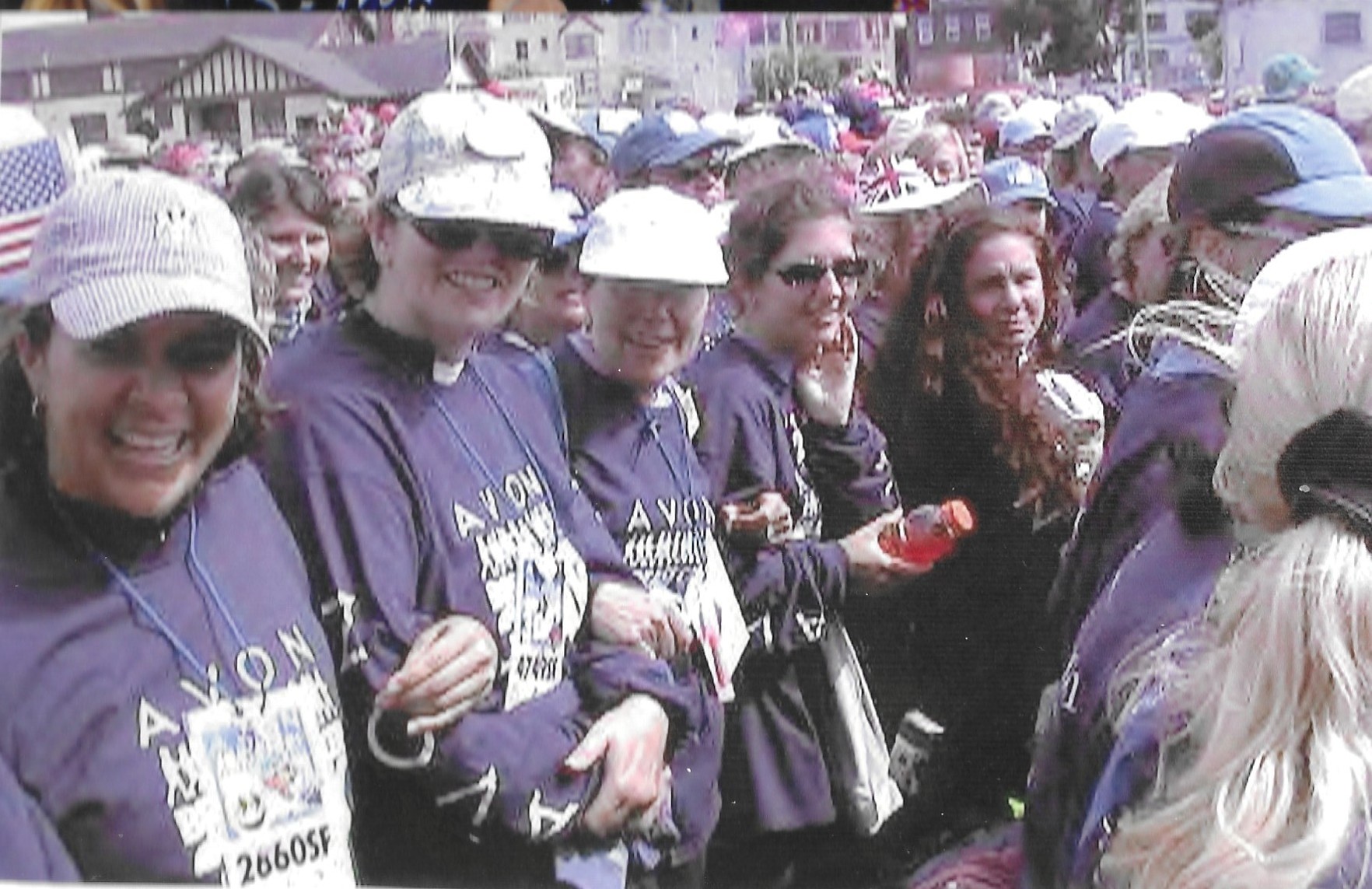
A daughter and mom who had walked together hugged. A survivor who had walked pounded a fist upwards at the sky, as if to say, “not yet!” I ran into my tent-mate in line and she gave me an excited, congratulations hug (and took my picture as I came through the tunnel of supporters, shown above). I had beaten the deadline by less than 45 minutes, but I had made it the entire way.
We were now in a holding area awaiting our grand entrance into the Marina, where the Closing Ceremony would occur. Everyone changed into matching 3-Day shirts and excitedly awaited the final .2 mile into the Marina. While waiting, a roar of applause broke out up at the front of the tunnel of supporters, who were still welcoming in the final walkers. I was at the end of the tunnel, and couldn’t see what the mania was about…a few minutes of applause and yelling took place before I could see what was happening. The San Jose bicycle police, who had escorted us the entire way, had ridden up through the tunnel, and people were showing them their gratitude and support. They had been so great, not only keeping us safe, but in keeping us going with their cheers and humor. They were the last folks through the tunnel. People then started to line up for the closing ceremonies. Arm and arm, we walked slowly down to the Marina, chanting some home grown 3-Day theme songs as we went.
The closing ceremonies were not as emotional for me as the holding area tunnel or the walk itself, but people who attended it said that the sheer number of walkers marching down the road was an incredible sight to see. When Christopher finally found me in the crowd, there was pride and delight in his eyes. Although I know he didn’t quite grasp the entire 3-Day purpose, he had seen—and experienced—the sacrifices made by our family over the 4 months prior to the walk. The training had greatly impacted my ability to be with and tend to my family’s usual needs. Training, along with my mom’s poor health, had created a lot of stress in the home. I don’t think my kids really knew why I was spending so much time out walking (probably 5 hours a day!). But after seeing all of the walkers, I think Christopher knew that his mom had participated in something very big and important.
On the way home, I talked a lot about the walkers’ stories. I spoke of the many supporters along the route who had lost loved ones to breast cancer, and how touching the whole thing had been. Christopher held my hand continuously for the hour-long drive. Unlike many of the moms, wives and friends of my fellow walkers, his mommy was coming home.
Final facts from the 2001 3-Day Walk
A woman’s chance of having breast cancer during her lifetime is one in eight.
Your chance of knowing this woman is nearly 100%.
The 2001 San Francisco 3-Day Walk brought in about $5.5 million (net) in funds to fight breast cancer (this is the amount that goes DIRECTLY to fight the disease)
I topped my own personal fundraising goal of $4,000 and raised just over $7,000 in funds (this includes corporate matching dollars and direct donations)
In polling other walkers who wore pedometers during the 3-Day, the final mileage was over 65 miles, and more than 150,000 steps.
Life after the walk
The 3-Day was definitely something I’ll always remember.
At the time, people kept asking me how it was. It was hard to describe it in simple words. It was many things: fantastic, awful, inspiring, painful, a blessing, a nightmare, cheerful, lonely, beautiful, overwhelming, and at times, surreal.
It was all of these things, packaged up in a journey that we seldom take the time to make. The journey was not the stuff of our daily lives. It was taking time off from the usual to challenge yourself and to make a difference. Just being able to do the walk made you realize how much of a gift it is to be alive and healthy. One of my fellow walkers had a saying, and I think it sums up how I felt after completing the walk. “Every day above ground is a good day.”
Make it one to remember.
Walker #4749 San Francisco 2001
Post-script: In the decades since the walk, breast cancer has impacted many people that I know and love. It continues to take many lives. Over 40,000 women will die from breast cancer in 2025 and approximately 316,950 women will be diagnosed with invasive breast cancer in 2025, according to breastcancer.org. Be preventative, do self-exams and get routine mammograms. There are many ways to help with the fight to end breast cancer, through donations of money or your time. If there is a walk in your vicinity (they now have 1, 2 and 3-day walks via the Susan G. Komen foundation) https://www.komen.org/get-involved/, and I haven’t scared you off with this blog, I highly recommend doing it (or sign up as a volunteer).
And finally, I want to once again thank the many people who helped with my fundraising back in 2001. Many friends, neighbors, relatives, and co-workers. Some have subsequently experienced breast cancer, but fortunately have survived. It’s a terrible disease. Let’s continue the good fight!
This year has been a wild ride; and it’s still not finished…so we should all buckle up (and wear our freaking masks).
For me, it is been a year of unraveling my past as I searched for and found my birth mother. The fact that my birth mother wanted no part of me…well, that was unfortunate and made me weep just a bit…but I quickly moved on. My adoptive parents – now both gone – were so loving and devoted to our family; they were my “real” parents my entire life.
I decided that the stranger who accidentally conceived me really doesn’t matter for the most part.
And right as I was processing this new found me (or was it simply the same me without as many questions?) COVID struck, or began to strike…just in time to derail my family from going on a long-planned trip to Japan. The news at the specific time of our planned departure was scary, countries were shutting down (the US was threatening to) and Japan itself was implementing all kinds of business and tourist-related closures and automatic quarantine requirements. After weeks of stressful watching and waiting, we finally pulled the plug literally days before our scheduled trip.
All I could think of at that time was poor us, we don’t get to go to Japan.
Months later, though, with the death toll and infection rates on the increase, the world as we knew it seemed to change right before our eyes; the cancellation of our trip didn’t seem to matter very much as chaos and panic took over our everyday lives. We committed to going to Japan someday in the future, and I pray the world will be such that we can.
I still remember that first trip to the grocery store after COVID became an official threat. I don’t remember what had transpired the days before, but I do recall being fearful of grocery shopping! It felt like a visit to the hospital to see a very ill, quarantined friend. Mask on, gloves on, sanitizer ready and waiting in the car.
Careful what you touch (and don’t touch anything!)!
I had heard there was a shortage of food so didn’t know what to expect. It was strange. Very little meat in the meat department, many empty shelves (certainly no hand sanitizer, wipes or toilet paper!) and people were clearly hoarding. There was both a calmness about it (people seemed somber and serious, at least from what one could see given their masks) as well as a frantic feeling (seeing others hoarding made me question if I should too).
I must admit I did buy some extra food items (that are still in my freezer and pantry, unused). And am I the only one who has those tiny, tiny, tiny – miniature – rolls of toilet paper that showed up when all the stores were out of the regular sized rolls? I’ve never used them, have you used yours?
The new norm.Less emotion, more procedural.
When I came home after those initial days of COVID grocery shopping I also remember the process of washing hands (the right way), sanitizing everything I bought and touched, and being genuinely convinced I was somehow contaminating every surface of my home and fridge. I had great angst about it and disinfected everything, and then everything again. I even remember the panic when I ran out of cleaning supplies for a week…oh, my…
Over time, isn’t it so odd that this has become so much less of an emotional journey and just an everyday procedural thing. People wear their mask, chat with friends, drink their Starbucks and go about their business, no longer somber or panicked (or disinfecting at every touch). And who would have ever thought that masks on everyone, on joggers, on the police, on your UBER driver, would become just part of our everyday life and scenery.
But having said that, the new norm has come with a lot of pain and cost.
During COVID some people’s lives have been forever changed. Family members may have died (not due to COVID necessarily, but often alone during hospital COVID isolation rules), weddings have been postponed; parties and annual traditions cancelled. Funerals have been live streamed (in some cases with even the deaths themselves happening over cellphones or Zoom calls so that loved ones can say goodbye).
The economic hit has also been terrible…luckily all of this initially happened during the spring and summer months given the need for outside dining and well-ventilated activities. The concern of course is what will happen moving forward…what businesses will be able to survive and which ones won’t. Please support your local businesses, as they really need us all.
Social distancing is the new intimacy.
The typical hugs and time spent with family and friends…so much has changed in this “new normal” we are now living in. Our everyday lives have become more isolated and solitary. I remember the first time seeing a good friend during those initial months of the virus, and not hugging hello or goodbye. It seemed so wrong and uncomfortable at the time…yet today, it has become the norm.
To hug someone is now the exception, and an exception you need to be on the same page about! There is now a little societal dance people do to help ascertain the “comfortable safety level” of any particular person. I’ll wear a mask if you do; I’ll take it off if you take off yours; where have you been the past 2 weeks? (and who have you been with!) Been tested recently?
In a few ways amazing and wonderful things have also happened. Parents now working at home have gotten to know their young kids (and have become more appreciative of their kids’ teachers!). Many people have become gardeners and DIY’ers…people are walking and working out in homemade gyms, LOL….a silver lining to the very dark cloud called COVID.
But 2020 isn’t just about the virus…
And if the virus wasn’t enough to give the year 2020 a bad rep, there have been epic natural disasters as well.
In my hometown of San Jose, the summer heat brought terrible fires (several of the largest fires in the area’s history), and with that the threat of evacuation. That was a terrifying experience that I don’t ever want to have to think about or plan for again. My heart goes out to people who have lost their homes, or even their lives; we should all thank fire department personnel everywhere after seeing what they have to do each and every working day.
And of course, all of those fires and the unrelenting heat, resulted in air quality issues that were in some ways completely startling (if you saw any of the photos of the orange skies in California, or if you simply tried to be outside and breathe!) yet most people simply said, “It’s 2020! What else should we expect?”
We ran our air conditioner for weeks to keep from opening windows. No-one went outside, it was a ghost town. The already impacted restaurants, with only outside seating due to COVID, were even more economically devastated. Wild animals, fleeing wildfires, heat and smoke, were invading neighborhoods they usually wouldn’t. I can only speak to California, of course, but know that wildfires hit many states this year in increasing numbers and magnitude…and I know that other states are also dealing with hurricanes, floods and other natural disasters (that seem to be “naturally” happening more and more…).
Looking out at the dirty, orange air…the heat….the threat of continued fires…it really did seem like perhaps the world was going to end. One wondered, what would happen next?
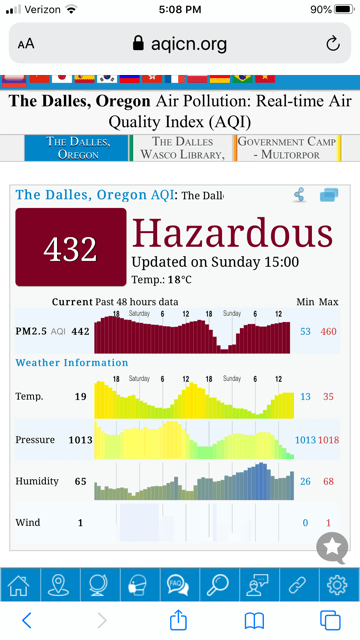
Well, for us we went to visit a son in Oregon. While there, the air quality was the world’s worst air quality. Imagine that. The worst air quality in the world, and we were there breathing it in.
We couldn’t see a thing (and that’s sad as Oregon is a beautiful state) and luckily they had indoor dining available as eating (and drinking…and more eating…) was really the only thing a visitor could do. Between closures due to COVID and those due to the dirty air, there just wasn’t anywhere to go and we ended up shortening our trip.
Things are just dirty in 2020.
And of course, during all of this, one must not forget all of the other dirty things going on besides the air quality.
Dirty politics being the primary one.
You know what I mean. The polarized politics. We all have seemingly become party-affiliated zombies, which makes us unwilling – or unable – to listen to the other side (whoever that might be)…
I know we once did listen and were able to believe what we heard! Where is Dan Rather or Walter Cronkite now that we really need to trust what we hear on the news. Instead of facts we offer opinions and pass along our party’s media propaganda. Both sides are doing it. The United States seems to have gone mad (I often wonder what citizens in other countries really think about us!). Throw in the unrest and divisiveness relating to Black Lives Matter and other societal inequities and injustices… and I fear our nation will never mend.
Civil war anyone?
I wonder what 2020 will bring next? Three more months, I fear what may be coming… Halloween may bring real zombies this year…perhaps the murder hornets are really on their way. I think Santa may opt out this Christmas (perhaps his elves can use my tiny toilet paper stash?).
I myself am a little concerned about the approaching time of year. Flu season is coming, the cold or wet weather will mean more people staying indoors. This change in seasons, I think, is going to be bad; the risk of the spread of the virus indoors is thought to be greater. But I also think we all may just really just need some sunshine, fresh air, exercise and vitamin D to keep from exploding!
With people indoors all winter…hmmm…things could get out of hand.
The election is less than a month away. I wonder if passing that milestone will make things better or worse. I fear it will do nothing to help calm the polarization we see today. What will the losing side do? What will everyday people do? I can’t help but think about the Purge…will that be our fate? What about the economy? What about people’s health if COVID lingers on?
So many uncertainties. Yet, some things have remained the same.
Important things.
— Relationships.
— Friendships.
— Our faith, in both God and humanity.
— Appreciation of what we have and the beauty that still exists.
— The love and happiness surrounding our pets, our passions and other simple joys.
We need to hold on to these things. We need to focus on them and nurture them; to not let ourselves become polarized and distorted.
And when the “next thing” comes along, as I’m sure it will (“It is 2020 after all”), take a breath…remind yourself of all that you have…and just hold on to those you love.
They say that there are 5 stages associated with a person dealing with any type of significant emotional loss,
denial
anger
bargaining
depression
acceptance
Yesterday I thought about how potential loss might be very similar, in terms of the emotions one goes through. You grieve the loss before it even occurs.
A raging wildfire (one of the largest on record here in California where I live in the foothills) this past week is now at a safer distance; perhaps still a threat, but today…there is hope on the horizon and I’ve allowed myself time to reflect on a potential loss that now appears unlikely to occur.
Yet…still mindful that winds can shift; still praying for those affected or in the fire’s path; still praying for the firefighters who have taken on a whole new awe for me. How do they do this job, in such heat and smoke, with such danger?
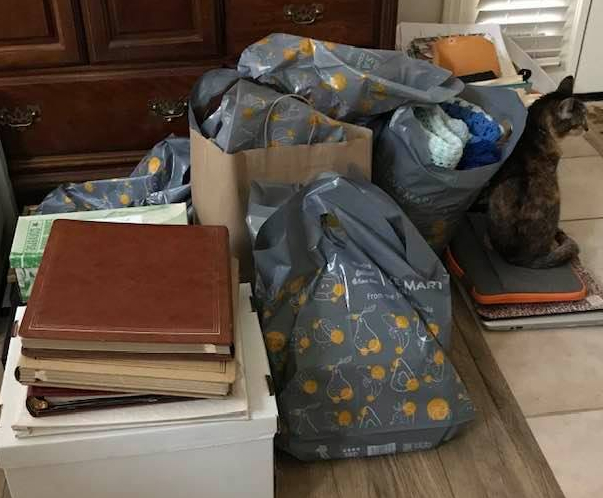
Our family’s evacuation items have been packed for 5 days; the 3 cat crates and cat supplies stand ready in the garage. A pile of bags and a few boxes, and electronics needed for work, are ready at the front door.
Five days ago the imminent threat began with the looming need to abandon our home of some 27 years; a home where we raised two sons and built a family’s life.
We didn’t know how much time we might have. What to pack? How to prioritize a lifetime of memories and precious things?
What would be the greatest impact to leave behind, especially if we lost the house to the fire?
Important documents were an easy and unemotional first step: passports and various identification cards and records thrown in the first box. A mental note now made that having birth certificates and our will stored in our nearby bank’s safety deposit box (a bank that would surely burn before our house in this particular fire!) is a mistake that needs future correction.
The cats come next. Mounting emotions start to claim more and more space in my head. I think how much the cats aren’t going to like being evacuated; not the crates, not the car-ride, and not their evacuation destination (a friend’s house with a resident dog). I know it’s only a temporary shelter so my mind starts thinking about longer-term options. Would we have to rent a home? For how long?
That’s when the panic begins. The realization that this is really happening.
What will it look like, if we lose our home? What will it feel like?
I now start to focus on what memories to take. I grab all of the photo albums; but wait, I know that many of these photos are scanned and likely available somewhere in the cloud. I start to sort through the many frayed albums and pick out a few I think are filled with photos I don’t have stored elsewhere; the wedding and honeymoon pics, various functions. I haven’t looked through these albums in years, yet they seem so vital to me at this moment, as if to lose them means I will forget the memories they have captured.
As I walk through the house I grab a seemingly odd assortment of framed photos. The photo of my husband at a friend’s wedding; the friend gone now for several years, and the photo only one of a handful remaining of the two of them.
Framed photos of long-gone family including beloved parents; many do not exist digitally so must be saved. My husband as an infant in the arms of his dad. A formal portrait of our family when the boys were young. A photo collage I made of my dad containing pictures of him as a young man…these don’t exist elsewhere. I look at his smile, confidence and strength and summon some of that to get through what is increasingly feeling overwhelming and terrifying to me.
Framed photos of our family are everywhere in this house…every age and stage captured and proudly displayed. Many likely exist somewhere in a Dropbox, but just in case, a chosen few are grabbed and shoved into a box.
I go room to room. I realize that I still have my kids’ yearbooks and Eagle Scout badges stored in their closets, even if they’ve been gone for years now. Prized school projects, awards and beloved stuffed animals (worn down from hugs and having been toted around by their toddler owners) are still stored up high in the garage rafters. I leave them all, the emotions creeping higher.
At that moment I realize so many precious things will need to remain.
I text my kids, what do they want me to save.
They respond with just you and dad, mom…and of course, the 3 cats.
I move throughout the house. The tears start to come.
How to choose.
In our bedroom, I look around; so many of my mom’s precious things are there. Quilts she crocheted for the boys; her needlepoint roses (so many roses, they were her favorite); things that have kept her close to me over the years. Even a pair of red pajamas, the ones she was wearing when she passed, still sit folded on a shelf. I had intentions to have them sewn into one of her patchwork quilts someday. I laugh at the notion as she has been gone 11 years now. The pajamas and needlepoint (and most of her other possessions) are passed over but I grab a few quilts for my sons.
Precious things surround me everywhere I go. I am a precious things hoarder I know. Precious things adorn this house; that is intentional. I attach so many memories to so many things.
Someone said to grab jewelry, so I go and look at that. My mom’s silver bracelet is really the only emotional treasure I think of, but then I see the necklace I gave her as a child, then her wedding ring…and the charm bracelet my kids and husband gave me many years ago…so many charms given since then, each with a story and precious significance. In a bag they go.
As I walk through the house I pass so many photos. I glance at them but need to move on. I need to focus on the most precious things.
The Christmas boxes are stored high up in the garage and contain my vast collection of ornaments – all precious things with their own unique stories. Handmade ornaments from the kids (two of everything as they went to the same elementary school and made the same gifts over the years). Unique ornaments from special friends or purchased in special places. Most are one of a kind, irreplaceable. They are a tradition each year as we decorate our Christmas tree; each ornament to be admired and its story told once again.
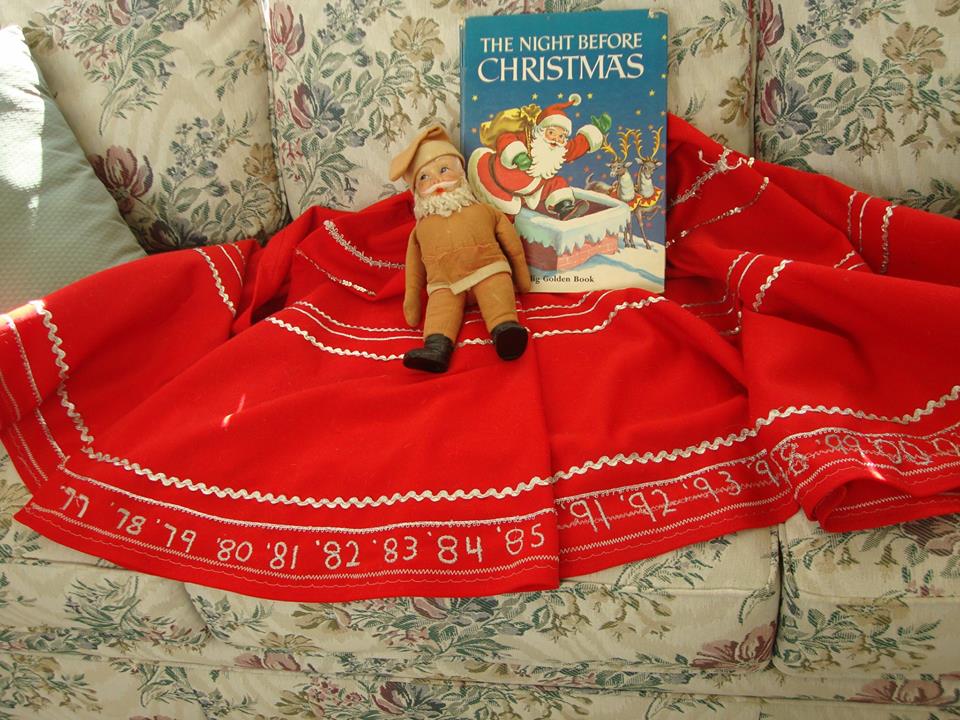
Then there’s the Christmas tree skirt my mom made when I was a young child, each year’s date sewn onto the skirt in the same silver thread. The stitches become erratic and wobbly over time; you can see my mom’s progression as she aged. And then the year she passed, and I took over. I dismiss my urge to retrieve it; I just can’t pack up everything and the garage is now so smoky.
I finally sit down and start a list. What have I already put aside and what still needs to be retrieved.
Surprisingly, there is actually very little packed up, a few boxes and several bags. Some albums and framed photos. I’m somewhat shocked at this…because it means I am leaving so many precious things.
On the list I become less emotional and more practical. Medications, clothes, glasses (all the different pairs scattered throughout the house!), the list of passwords, the address book, necessary electronics and files related to my work-at-home job. The items that can’t be proactively packed and set aside are marked in yellow highlighter. Hopefully we’ll have time to pack them if evacuated.
Each day since that first day of packing I think of new precious things. It is overwhelming so I try to dismiss the urge to retrieve more and more. A few things do get added, but very few.
There is little comfort knowing I have packed the most important things. Now I become obsessed with watching the fire’s progress. It is scary to imagine losing our home and the surrounding community that has become part of our lives.
I’ve always felt sad for people when watching them on the news in the same situation, but now I feel a whole new affinity for such people. How did they manage; we don’t really know as we’re usually not told. The news only shares the family’s initial shock, their sadness, and perhaps their appreciation that they and their family survived. Later we hear how communities have rebuilt but we don’t know how an individual family moved forward; I think about that. The need to rebuild and move forward. How will that look?
So back to the 5 stages of experiencing loss. I do think they are applicable. I started with denial, a belief it just can’t happen, we won’t lose our home.
I’m not sure I felt anger, but I did feel there was an unfairness about it. Why won’t the governor call out the National Guard, where is all of the mutual aid? I felt irritation over the poor emergency evacuation communication; impatience with the conflicting information.
I definitely bargained. I asked people to pray. I prayed.
And that’s when I think I finally realized that it is the lives that are the precious things. Not just our lives, but the lives of so many others and the firefighters.
With that realization, I somewhat let go of the sadness of losing the things. And there was an acceptance that there really wasn’t anything we could do but wait…and hope…and pray. We knew we could get out with our lives and our cats…and so, the next few days were spent texting nearby friends, many of who were in more imminent danger than us, providing updates, encouragement and love. No more packing. No more worry about precious things that could be forever lost.
Fortunately the weather has been favorable, or perhaps the prayers are really to thank. The fire has become less of a threat.
I am still packed, but feel hopeful.
As I write this I think of all the expensive gadgets we have in this house. Not one was on my list or packed to go.
And as I mentally unpack our evacuation bags and boxes I do have to laugh at its contents. Nothing of real value. But everything completely priceless.
Oh, it isn’t about my advancing age. After all, I always say you are as old as you feel, and most days I feel much younger than my years. I’m generally a happy, positive and thankful person; just not quite as much today.
My sadness is that this is my first birthday since I found my birth mom a few months ago.
Now, keep in mind that I hadn’t even looked for her prior to this past year; never really thought much about being adopted.
And actually, to be truthful, I wasn’t even looking for her when I did a 23andme test last year to try and learn something about my roots. I had been looking to find out if I had Irish or German heritage or otherwise. I hadn’t been thinking of or searching for my birth mom.
But I had found her. The 23andme results along with other information led me to my birth mom’s family tree on Ancestry.com. (you can read all about this in my previous blog post if interested)
And even though I didn’t want to meet her, or reunite permanently in any way, I wanted to reach out to her and just “touch bases” (LOL, that sounds so cheesy, but truly, I just wanted to get 100% confirmation she was in fact my birth mom, find out a bit about my medical history and let her know I was alive and well). I wanted her to know that my life had turned out great. That two loving parents had adopted me as an infant and were the world’s best parents a child could have ever had.
So I had written her.
Friends said to be careful. They know me to be an emotional sort, someone who cries while watching rescued animal videos and during television programs and the like. I can’t even make it through one episode of This Is Us without crying (how can anyone?). I also wear my emotions very visibly and deeply, I think it is the writer in me; I think you have to share how you aretruly feeling to evoke an emotional response in others.
In any case I wrote her this letter:
Dear Suzanne,
I am writing you as I believe you to be my birth mother.
I am reaching out to you to let you know that I have had a wonderful life. I had the world’s best parents (both now deceased) and now have my own loving family (married 32 years and have two awesome adult sons).
I don’t want to upset you, disturb you or otherwise cause any concerns for you. I thought if we could connect I could answer questions for you, if you have any. And I thought you could answer questions for me. My primary questions are really just relating to ancestry info and health history information. I would also be interested in learning the name and any information about my birth father (for the same ancestry and health history reasons).
Why do I believe you to be my birth mother?
I had my family all do 23andme DNA profiles at Christmas. Being adopted has meant my sons didn’t really have a lot of info on their roots. My husband’s side of the family is also very small, so with no info on my side…it seemed like a fun thing to do, for them to get a bit of info on their ancestry. The results were interesting for them to learn. The results also pointed out that I had some cousins with the Diedrich name listed. I had known that Diedrich was my mom’s maiden name.
Recently I also dug into other sites such as Ancestry.com and pulled out my parents’ old file folder on my adoption. From there I had snippets of info, such as your full name, your age, a little of your family history and some other info relating to your father. It wasn’t hard to pull the info together and identify you were likely my birth mom.
My birth name was Theresa Gale Diedrich. I have a little background information on you, and know you met me prior to giving me up. That must have been difficult, but I understand the situation and harbor absolutely no ill will or negative feelings.
If you would like to reach out to me I’ll provide some contact information for you. It would be great, even if you don’t want to connect, to at least hear you received this. Again, I don’t want to create stress for you. Even sending this letter is not something I do lightly for that reason…but I just didn’t know another way to open up the possibility of dialogue with you.
Diane
I thought it was the perfect letter to meet my objective of “touching bases.” I mailed it and waited…
Weeks went by.
I was fairly sure I had found the correct address (on the internet, scary what you can find there)…so I waited some more.
But no response.
I had provided every type of contact info. My email, cell phone, address, etc.
In any case, more time passed.
No response was challenging. Maddening actually.
Friends said to give it time. Not to take action.
But I wrote a second letter (why don’t I ever listen to the advice of my friends!).
In this note I told her I would not write her again (and I truly meant it), but that I was disappointed in her lack of response. The whole “touching bases” was supposed to be a positive after all! My life had turned out well! Wasn’t that a positive for her to know?
I told her while I would try and respect her privacy that I was going to continue to find answers about my ancestry by connecting with people on 23andme, researching Ancestry.com or even Facebook. I told her that I didn’t understand her lack of response. I still wanted to know for sure she was my birth mom. I still wanted to learn who my birth dad was (to “touch base” with him, I suppose…). I wanted to learn about medical history, really more for the sake of my two sons.
I agonized over this letter just a bit (given her lack of response to the first one). Should I even send it? What was I hoping for?
Truthfully I wasn’t sure what I was hoping for at that point. In looking back I think I was secretly hoping to make a small connection with her. Not a “let’s meet annually” sort of thing, and not likely even meeting at all. But a connection, a brief exchange of information. Confirmation she was my mom. Maybe my birth dad’s info. Something.
While I had originally been quite positive that I held no ill-will about her giving me up, I wondered if I did in some small way! Maybe I wanted something more from her, some emotional olive branch; acknowledgement that she was genuinely happy my life had turned out so well? Hmmmmm……
I thought long and hard on this, but was still fairly certain I harbored no deep resentments or ill-will regarding her long ago decision. None. I even sympathized with it.
No, any ill-will I might have been feeling at this point was from her lack of response to my initial letter. It seemed cruel and heartless. I tried to put myself in her place. Maybe it was a shameful place, or some type of trauma had been involved. But now, so many decades later…a lifetime, really….and to have heard my life had turned out so well. It seemed wrong that she chose to be silent.
It would have been so simple for her just to respond with, “Have a great rest of your life. Thanks for touching base.”
I held on to my 2nd letter for several days. Along with her mailing address I had found her phone number on the internet as well. I toyed with the idea of just calling her, but I thought a phone call would be too aggressive. I felt like it really should be her decision whether she responded. I still held out hope that she would.
So in the end I mailed the second letter.
But again, there was no response.
Time went by.
More time passed and I somewhat moved on.
It was fine. I had lived my entire life without worrying about my biological roots, after all. Plus I had learned a lot through 23andme. I had learned a lot about my biological family through Ancestry.com. I had learned a lot!
So what was the deal with me still pondering about my past?
Why did I still feel a response was so important?
I thought maybe my own parents being gone or my sons settling down (perhaps the side effects of an empty nest or aging?) were bubbling up these feelings…who knew…but I wondered if something may have triggered this need to learn more. Perhaps it was simply the DNA results, suddenly getting a “probable” mom identified?
Then, one day, I finally received a response.
It wasn’t really a response. It was more of a “Cease and Desist.”
It was from a lawyer.
While the particular words weren’t used, “Cease and desist” was my immediate reaction to the brief letter.
While I had done nothing wrong, I felt intimidated by its abruptness and tone.
And it was from a lawyer!
There were just four sentences.
The lawyer stated he had been engaged by my birth mom and was relaying her thoughts; it began with what I interpreted as general displeasure over my sudden appearance and unsolicited communication. One sentence had (incredibly) generic and pretty much useless medical info. One sentence said she would provide no info about the birth dad. And finally, please respect my privacy and buzz off.
Well, it didn’t REALLY say buzz off. After all it was written by a lawyer she had engaged. Engaged for the sole purpose of not connecting in any way, and of literally getting me to Cease and Desist.
I couldn’t believe it. During the initial few moments I alternated between being really upset and sad at being dissed in such a manner (pretty sure I cried), and then feeling completely intimidated.
Friends said not to respond.
But again, I chose not to listen.
So I responded to the lawyer, and reminded him – like I had said to my birth mom – it was supposed to be a good thing.
In the brief response I told him I was sad that my birth mom had responded through him and that, “I had no way to know of the depth of her apparent emotional concerns about my existence.” (Yes I really wrote that…I was hurt after all) But I also wished her well and reiterated I was in fact, buzzing off.
So that was that.
I still can’t put my head (or heart) around why she would have responded the way she did. I’m sorry, but no amount of shame or whatever she was feeling should have trumped reaching out to me just once, especially if she was going to confirm she was my birth mom anyway.
So, that’s it. That’s the story. And that takes me to today. My birthday.
This morning I woke up and unbelievably…thought about my birth mom. I wondered if she remembered the date. Every year on my birthday…has she ever thought about me? Has she ever wanted to know what happened to me?
And now, is she glad to know my life turned out so well, that my adoptive parents were wonderful and kind?
And why do I even care? She is really no-one to me.
Yet it saddens me somehow; thus the need to write this piece. Writing is the only way for me to process my emotions and move on.
Now I feel better.
My chosen family, husband and sons are giving me lots of love.
My cell phone keeps letting me know a new birthday text has come in.
My life is full of love and wonderful blessings. Truly it is time to move on.
I was adopted as an infant and even some 60 years later, never knew who my biological parents were. I never knew if heart disease, cancer or dementia ran in my family; or whether I was 50% Irish, German, British or what. I had never seen someone who looked like me, or even a little like me.
I had been adopted by two wonderful parents, so throughout my life I never really cared too much about “who” I was from a genetic sense. I truly didn’t think about it very much except when new doctors asked me the inevitable questions relating to, “What health issues run in your family?” I always just drew big lines through the pages of questions relating to medical history while shrugging my shoulders. I just didn’t know anything relating to my biological roots.
Recently, however, my world has changed.
I, along with my husband and adult sons, did 23andMe DNA tests. I had thought it would be interesting, especially for my sons (who have already started getting those questions about medical history from their docs). While they had some ancestry insights on my husband’s side, my family history had of course been a blank slate. I had hoped that the 23andMe tests would offer at least some helpful info on my side of things, and I was excited for us to get our results.
The test results finally came back and I suddenly had new-found insights into my heritage.
52.4% British and Irish; 22.8% French and German; and 2% Italian. Ah, perhaps an explanation for my pale complexion and why I get so easily sunburned!
My sons also received their own set of percentages that at least began to fill-in some info on their unique genetic blueprints.
But another revelation was also presented to me. I had DNA matches to several second and third cousins. Even more unexpectedly, I had DNA matches who had my birth mother’s maiden name listed in their profile as a family name in their ancestral tree. That meant something! I had found biological kin.
With the names of several newfound cousins in hand I began a free trial on Ancestry.com. Using the info I now had, along with the info from adoption paperwork, it wasn’t hard to identify my probable birth mom. Remember I hadn’t had her first name initially.
While I hadn’t really ever thought much about my biological birth parents, having a possible identification of my birth mom seemed to open up an opportunity to learn more about “me.” So with growing excitement I decided I’d build my family tree on the site and see what I could uncover.
If you have never seen Ancestry.com the outcome you are looking for when building your family tree is a large number of linked boxes. Parents linked to their kids; grandparents and those before them, all linked to each other. Linked means family. Generations of links mean a view into your ancestry in terms of people and potentially even relating to the health of your genes.
The first decision I had to make was what name to put in my box, “Diane Marie Doran” or “Theresa Gale Diedrich”; adopted name I’d had all my life, or my biological birth name I’d had for weeks.
The question seemed simple enough. “Who am I?”
I started with my biological birth name as I thought that made the most sense in finding all the linkages to my new found “biological family”.
Initially the box labeled with my birth name (a somewhat foreign name I had never used) sat there seemingly unconnected to anyone but the maiden name of a woman I didn’t even know. It was kind of a lonely feeling. But I kept trying to form other connections around me.
On Ancestry.com there is this concept of getting a leaf (a hint to moving forward on building your tree)…but no matter what I did or what I searched on, I just couldn’t get any clues. No leaf, no info.
My box just sat there with the one connection to my birth mom’s maiden name. At one point I even deleted my tiny two-box family tree completely, it just seemed so futile.
But the next day I started over with some snippets of info that I had found with some online searching (it is amazing what you can learn on the internet; almost scary, actually). I found an article on what I surmised was my biological grand-dad along with mention of his three children. With a little more sleuthing I was confidant that I had found my birth mom.
With the grand-dad’s name I found the correct Diedrich family tree (which thankfully was not set up as private so I could take more than a peek).
I got a leaf, and then another.
Soon it was raining leaves.
From there I quickly developed many generations of connected boxes (only on my biological mom’s side as I didn’t know my biological dad’s name as yet). I was amazed at the ability to pull up photos of biological relatives’ weddings, their high school yearbook photos, newspaper clippings, military paperwork, immigration documents and so much more. I felt like I was learning so much about my biological roots; when my family migrated from Germany and more. It was fascinating, especially the historical records one could pull up and see.
It was so fun that I wanted to add my “real” family to see all of their historical info as well. I was so excited to see the entire “me” unfolding in the myriad of interconnected boxes. I thought I’d add my husband, sons, adopted brother and my adoptive parents. I was eager to see some familiar names and start seeing those connections take shape as well.
But that is when I was told that I had to choose. I had to “set a preference” in my ancestral tree: Biological parents (and family) or adoptive; one or the other.
I tried to over-ride this default, adding my adopted brother as a sibling under my biological family tree; but then he showed up under my birth mother versus our adoptive mom! I tried to trick the app, but to no avail. I thought it wasn’t very kind of the app to make me have to choose.
Perhaps this requirement for me to choose, to set a preference, was just a design decision that some engineer thought made complete sense. Clearly that individual didn’t have to involve two sets of families to answer the question, “Who am I?”
All of this irritated me, confused me…and frankly, made me just a bit emotional. I had to decide. Which “representation” of me was more important? Which set of roots (DNA or a lifetime of living) was more important?
That’s when it really hit me.
I had thought the genetics of my ancestry was so important, but staring at the interconnected boxes of strangers made me feel like an outsider. Worse, staring at my adoptive family now made me feel just a bit like a traitor. Weren’t they my real family? But I started wondering…I wondered how my adopted relatives depicted me on their own family trees. Was I there in a connected box? Or perhaps I was a box floating out in the cosmos, with a dotted line saying, “adopted.” Now my brain really began to spin.
Should my family tree be the parents who chose me, loved me and cared for me? Should it be the cousins I have known over the course of my life? By this time I had found many scans of documents and bits and pieces of my adoptive ancestors’ lives. Here were all the people I had actually known and cared about, many of who were no longer living, like grandparents, aunts and uncles. None of these people shared my DNA; they had just shared my life. I looked at these boxes (with my preference set to adoptive family) with great fondness. I remembered these people. They were biologically linked to my parents, just not to me.
Then I clicked over to my biological tree. These boxes and linkages contained no real emotional ties; the people were foreign to me. The linkages might have appeared connected to me on the screen, but I felt no connection. I was fascinated by the linkage, but emotionally ill-at-ease. To some extent I felt like I was eavesdropping on another family, clicking on their photos and moments; trying desperately to feel some connection and sense of inclusiveness.
I know that the whole point of the site is biological kin. But at that moment I couldn’t think why I cared beyond the statistics of 52.4% British and Irish; 22.8% French and German; and 2% Italian. Except maybe to know more about health history…so is the benefit of my entire ancestral search really about how my biological family tree members have died?
I think about what is more important, the “who” I could have been versus the “who” that I am.
The adopted me is who I am, why I am not a fashionista, why I love gardening, my sense of ethics, why kindness is paramount to me, and maybe even why I became a writer. My adoptive dad’s love for developing an amazing vocabulary, my adoptive mom’s insistent voice to be kind, open-minded and caring. That is all what made me, me.
I finally decided, after making a few notes on my biological roots for my children, that I will set my preference for the adopted me. That is really the “me” and the family I know. I feel it somehow honors my adoptive parents, who were the best parents in the world. And it leaves me in a comfortable familiar space, with comfortable familiar names, in comfortable familiar boxes.
The linkages may not be based on DNA, but the linkages are real. The linkages are based on a lifetime of shared moments and connections (still ongoing today).
And as for finding my birth mom?
Yes I found her. That’s another story for another time.
Let’s just say I couldn’t have had better parents than the ones who raised me.
Mom and Dad…missing you even more today and wish you could see your wonderful grandsons as the bright and loving young men they are.
That’s what true family is all about after all…who you have loved…who you have lost… who remains in your heart…and who you will always remember.









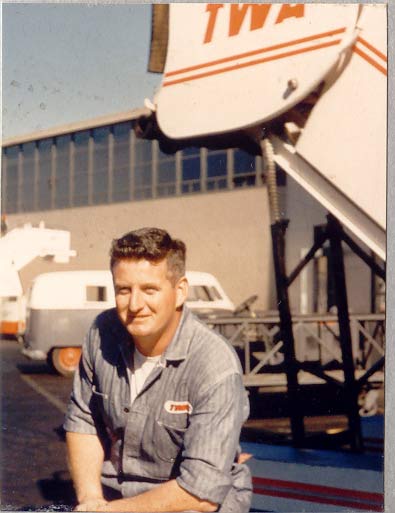 Framed photos of long-gone family including beloved parents; many do not exist digitally so must be saved. My husband as an infant in the arms of his dad. A formal portrait of our family when the boys were young. A photo collage I made of my dad containing pictures of him as a young man…these don’t exist elsewhere. I look at his smile, confidence and strength and summon some of that to get through what is increasingly feeling overwhelming and terrifying to me.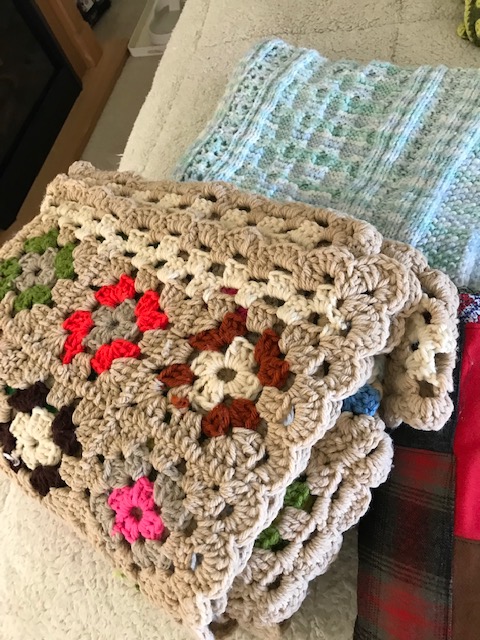


 52.4% British and Irish; 22.8% French and German; and 2% Italian. Ah, perhaps an explanation for my pale complexion and why I get so easily sunburned!
 building your tree)…but no matter what I did or what I searched on, I just couldn’t get any clues. No leaf, no info.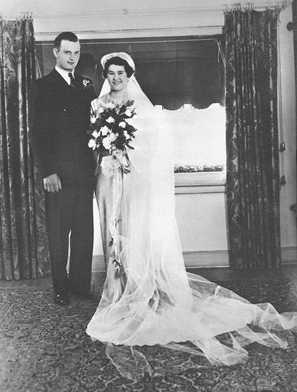
 All of this irritated me, confused me…and frankly, made me just a bit emotional. I had to decide. Which “representation” of me was more important? Which set of roots (DNA or a lifetime of living) was more important?

 Obsoleted Soccer Mom